
A Safe, Body-Aware Approach to Trauma Treatment
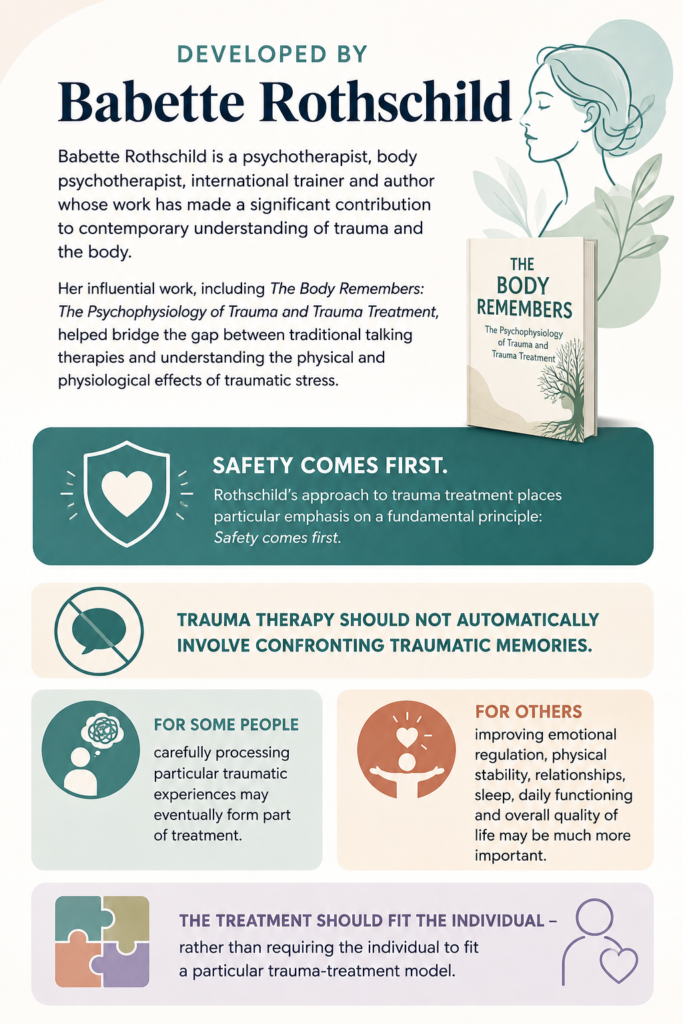
Somatic Trauma Therapy (STT) is a trauma-focused therapeutic approach developed by internationally recognised psychotherapist, author and trauma educator Babette Rothschild.
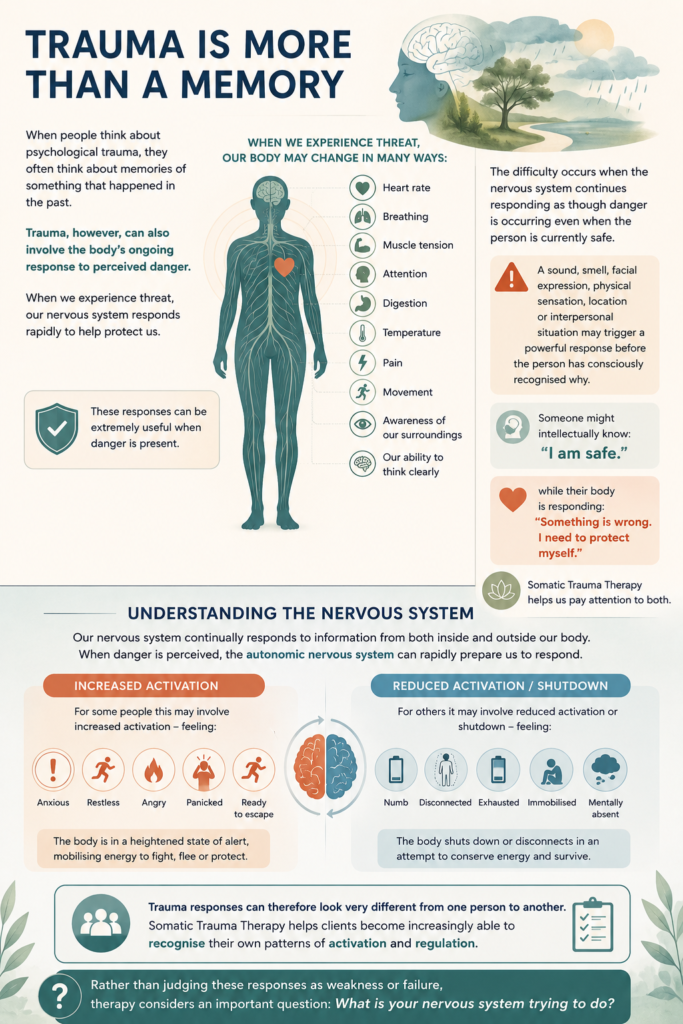
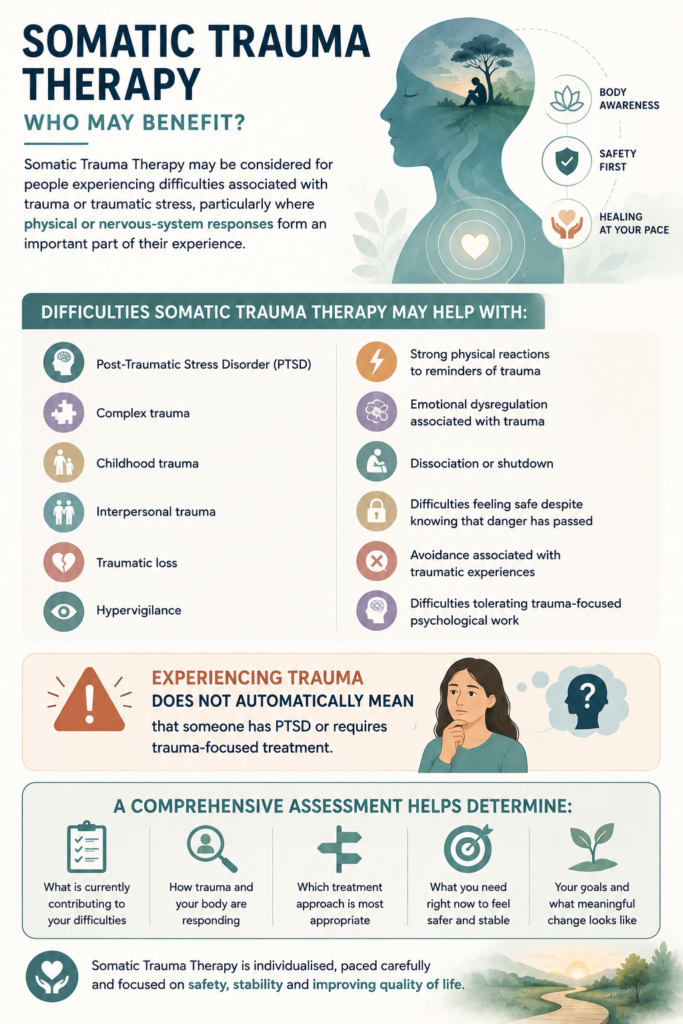
Somatic Trauma Therapy recognises that trauma can affect much more than our thoughts and memories. Trauma can also influence the way our body and nervous system respond to situations long after the original danger has passed.
For some people, these responses may include feeling constantly alert or on guard. For others, trauma may be associated with shutting down, feeling numb or disconnected, experiencing strong physical reactions, or becoming overwhelmed by sensations, emotions or memories.
Somatic Trauma Therapy helps clients and therapists pay careful attention to these physical and nervous-system responses while maintaining a strong emphasis on safety, stability and choice.
At DBT Clinics Australia, Somatic Trauma Therapy is not about forcing someone to revisit traumatic memories.
Our first priority is helping people develop sufficient stability and resources to manage everyday life safely before considering whether direct trauma processing is necessary, appropriate or helpful.
Our Experience in Trauma Treatment
At DBT Clinics Australia, Somatic Trauma Therapy is an important part of our approach to working with trauma.
Dr Peter King has undertaken extensive training in Somatic Trauma Therapy with Babette Rothschild and has subsequently co-led professional Somatic Trauma Therapy training alongside Babette Rothschild in Australia, New Zealand and the United Kingdom.
This experience has strongly influenced our approach to trauma treatment.
We place particular importance on:
- – physical and emotional safety
- – stabilisation before trauma processing
- – understanding autonomic nervous-system responses
- – recognising signs of increasing arousal or shutdown
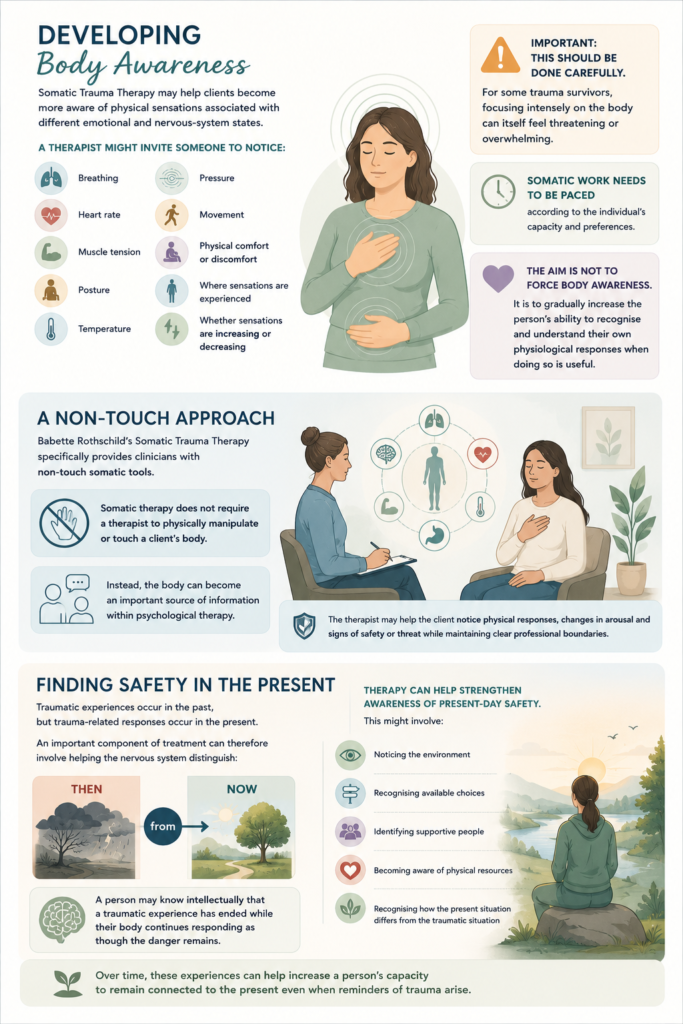
- – helping clients develop greater awareness of physical responses
- – strengthening internal and external resources
- – pacing treatment carefully
- – avoiding unnecessary re-traumatisation
- – recognising when trauma-memory processing is appropriate – and when it is not
- – tailoring treatment to the individual rather than rigidly following a single trauma-treatment model.
Our clinicians recognise that effective trauma treatment is not measured by how quickly someone can tell their trauma story.
Treatment should be guided by what helps the individual become safer, more stable and better able to live their life.
Key Somatic Trauma Therapy Strategy “Trauma is not happening, it’s a memory you are experiencing”
You Do Not Have to Tell Your Whole Trauma Story
One of the most important principles within Somatic Trauma Therapy is that trauma treatment does not automatically require detailed retelling of traumatic experiences.
For some clients, detailed discussion of trauma before sufficient stability has been developed can increase distress rather than reduce it.
Trauma therapy should therefore be carefully paced.
There may be times when knowing the general nature of what happened is clinically important.
However, clients should not assume that effective treatment requires them to immediately describe every detail of traumatic experiences.
Sometimes the most useful therapeutic work involves understanding what is happening right now.
For example:
What happens in your body when you become frightened?
How do you recognise that you are beginning to become overwhelmed?
What helps your nervous system recognise safety?
What situations cause you to shut down or disconnect?
What helps you return to the present?
Developing this awareness can create an important foundation for later therapeutic work.
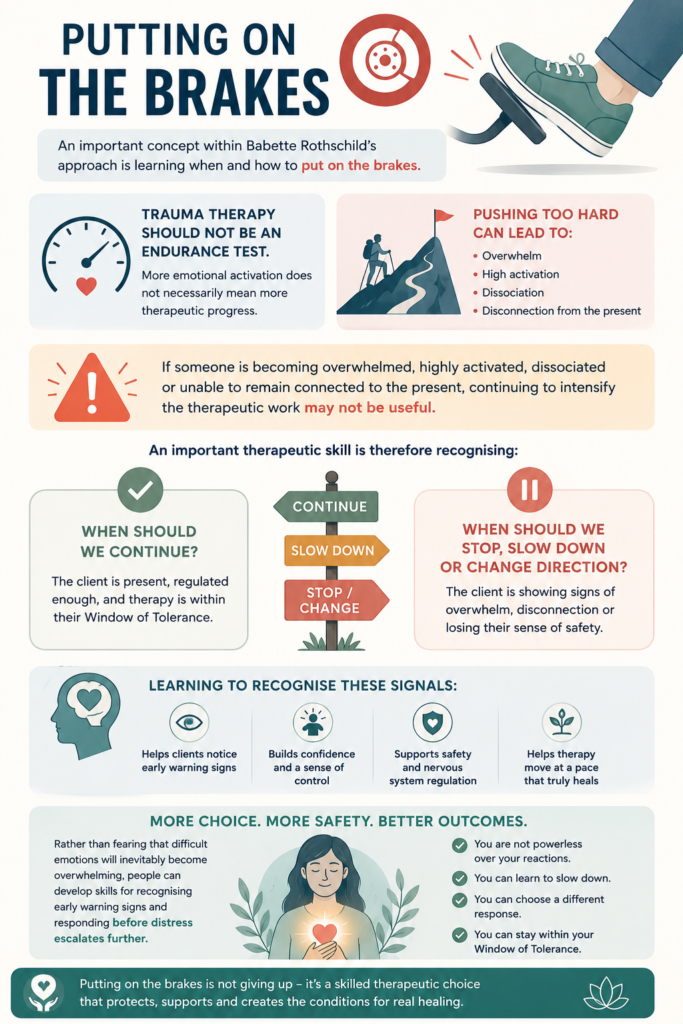
Key Somatic Trauma Therapy Strategy “Putting on the Breaks”
Stabilisation Before Processing
At DBT Clinics Australia, we place significant emphasis on stabilisation.
Before directly processing traumatic memories, we consider whether a person has sufficient capacity to manage the emotional and physiological responses that trauma processing may activate.
Stabilisation may involve developing greater capacity to:
- – recognise increasing distress
- – regulate emotional arousal
- – remain oriented to the present
- – recognise physical signs of activation
- – manage dissociation
- – tolerate difficult sensations and emotions
- – use grounding strategies
- – identify sources of safety
- – communicate needs and boundaries
- – manage crises
- – maintain daily routines
- s- trengthen supportive relationships.
For some people this phase may be relatively brief.
For others, stabilisation may represent an important therapeutic intervention in its own right.
There is no benefit in rushing trauma treatment simply because a particular therapy assumes that traumatic memories must be processed.
Key Somatic Trauma Therapy Strategy “Body Awareness”
Do Traumatic Memories Always Need to Be Processed?
No.
This is an important principle within our approach.
There is no universal rule that every traumatic memory needs to be revisited or processed in detail for someone to recover.
One of the explicit aims of Babette Rothschild’s Somatic Trauma Therapy training is helping clinicians distinguish between people who may be suitable for trauma-memory processing and those for whom processing traumatic memories may not currently be appropriate.
The decision should be based on the needs, stability, preferences and circumstances of the individual.
For some people, carefully processing traumatic memories can be helpful.
For others, treatment may appropriately focus on:
- – improving daily functioning
- – reducing distress
- – improving emotional regulation
- – increasing physical and psychological safety
- – reducing dissociation
- – improving sleep
- – strengthening relationships
- – increasing engagement with meaningful activities
- – improving overall quality of life.
Trauma recovery does not have to be measured by how much of the past someone can revisit.
What Happens in Somatic Trauma Therapy?
There is no single session structure that applies to every client.
Treatment is individualised according to your needs.
Early therapy commonly involves developing an understanding of:
- – what difficulties you are currently experiencing
- – how these difficulties affect everyday life
- – what situations trigger distress
- – how your body responds to perceived threat
- – whether you experience hyperarousal, shutdown or dissociation
- – what currently helps you feel safer or more regulated
- – what you would like to achieve from therapy.
From there, therapy may focus on developing greater stability and increasing your capacity to recognise and manage trauma-related responses.
If trauma-memory processing is eventually considered appropriate, this should be discussed collaboratively and undertaken at a pace that maintains safety and choice.
Integrating Somatic Trauma Therapy With Other Treatments
Somatic Trauma Therapy does not need to exist in isolation.
Babette Rothschild’s approach emphasises the importance of clinicians having access to multiple theories, techniques and treatment models so that therapy can be tailored to the individual.
At DBT Clinics Australia, this principle is particularly important.
Depending upon the needs of the individual, elements of Somatic Trauma Therapy may complement other evidence-based psychological approaches, including Dialectical Behaviour Therapy (DBT) and Radically Open Dialectical Behaviour Therapy (RO DBT).
For example, someone may initially benefit from DBT strategies for emotion regulation and distress tolerance alongside somatic strategies for recognising physiological arousal and maintaining safety.
Another person may experience trauma alongside patterns of excessive self-control, emotional inhibition and social disconnection, requiring a different therapeutic approach.
We do not believe that every person who has experienced trauma requires exactly the same treatment.
Trauma Therapy Should Fit the Person
There are many different approaches to trauma treatment.
We do not believe that one approach is appropriate for everyone.
A treatment that is helpful for one person may be poorly suited to another person’s needs, stage of recovery or nervous-system responses.
Our approach therefore begins with the individual rather than the treatment model.
We ask:
What is happening for you now?
What would improve your quality of life?
What helps you feel safe and stable?
What treatment are you ready for?
What treatment do you actually need?
Only then do we consider how particular therapeutic approaches can help.
Is Somatic Trauma Therapy Right for Me?
If traumatic experiences continue to affect your emotions, relationships, physical responses or everyday life, an assessment can help determine what type of treatment may be most appropriate.
You do not need to arrive ready to tell your entire trauma story.
You also do not need to know which trauma therapy you require.
At DBT Clinics Australia, our clinicians can work with you to understand your current difficulties and develop an individual treatment plan focused first and foremost on safety, stability and improving your quality of life.
Book a Trauma Therapy Assessment
If you are considering trauma therapy, the first step is an individual assessment with Dr. Peter King.
We can explore your current difficulties, previous treatment experiences, trauma-related symptoms and treatment goals and discuss whether Somatic Trauma Therapy, DBT, RO DBT or another psychological approach is most appropriate for you.
Contact DBT Clinics Australia to arrange an initial assessment.